
Why separate residential service from commercial mechanical work?
You can ask the owner to lay three contracts on the table. Choose a split-system changeout for a homeowner, a rooftop unit for a shopping center and a maintenance agreement covering both service calls and potential replacements. Read the signature blocks. Trace who sold the job, who contracted for it, who pulled the permit and who issued the warranty. A general ledger can give all three the same revenue code despite different licensing, insurance and collection requirements. The identity on those documents is the starting point for deciding what the buyer can keep doing after closing.
South Carolina regulates residential specialty work through the Residential Builders Commission. For commercial construction over $10,000 in regulated classifications, the Contractor’s Licensing Board describes the general or mechanical licensing requirement. It requires a primary qualifying party for each requested classification or subclassification. Get the exact classification and any financial group limit from the record. A person able to supervise heat pump replacements for homeowners may have a different scope from the person supervising refrigeration equipment at a grocery store. Ask the respective board about borderline projects before you count them in a particular category.
If you are selling, you can make that distinction without disclosing the customer list to every potential bidder. Prepare a redacted sample with the owner’s identity removed but the property type, contract amount, customer relationship, license details and final status retained. Show the bidder how the samples tie back to the revenue schedule. Once a qualified buyer is under confidentiality and ready for diligence, allow its advisers to inspect the originals and reconcile exceptions. That sequence gives a buyer enough evidence to price the business while protecting customer relationships.
Which rules change the handoff?
Your handoff depends on the job. For residential work, identify the specialty licensee and bond principal. For regulated commercial work, confirm your appropriate classification and primary qualifying party. If you service the coast, check your permit and floodplain records too. Give your buyer one paid job in each category so they can verify which obligations you are asking them to take over.
| Question | Record or authority | Closing decision |
|---|---|---|
| Who can qualify commercial work? | Contractor’s Licensing Board classification and primary qualifying party | Match the buyer’s staffing plan to each classification in backlog. |
| Who is the residential bond principal? | Residential Builders Commission bond or continuation | Ask the surety and commission about the proposed contracting entity. |
| Which site has a floodplain permit? | Charleston flood zone guidance and address-specific permit file | Assign inspections, correction work and the final collection. |
For residential specialty heating and air, the commission describes a $10,000 surety bond when the undertaking for an individual property owner exceeds $5,000. Its instructions identify the individual as principal, subject to its exception for a certificate of authorization bond. Pull the actual bond and any continuation certificate. The person who has guaranteed an obligation may want a release at closing, while the customer still expects the installing company to remedy a defect. You should obtain a written answer for existing obligations and confirm placement of any required new bond before work begins under another name.
The face value of a surety bond does not tell a buyer what the liability policy will pay for a water leak, a roof penetration or a delivery accident. Ask the carrier for the named insured, exclusions, deductible, claims history and treatment of completed operations. General contractors and property managers may require their own liability limits or evidence of workers’ compensation. You should verify each material customer’s contract. An insurance broker can quote the new operation and explain transition coverage. Include the difference in annual operating costs and any immediate premium in your financing model.
How does a flood zone change the price of a Charleston installation?
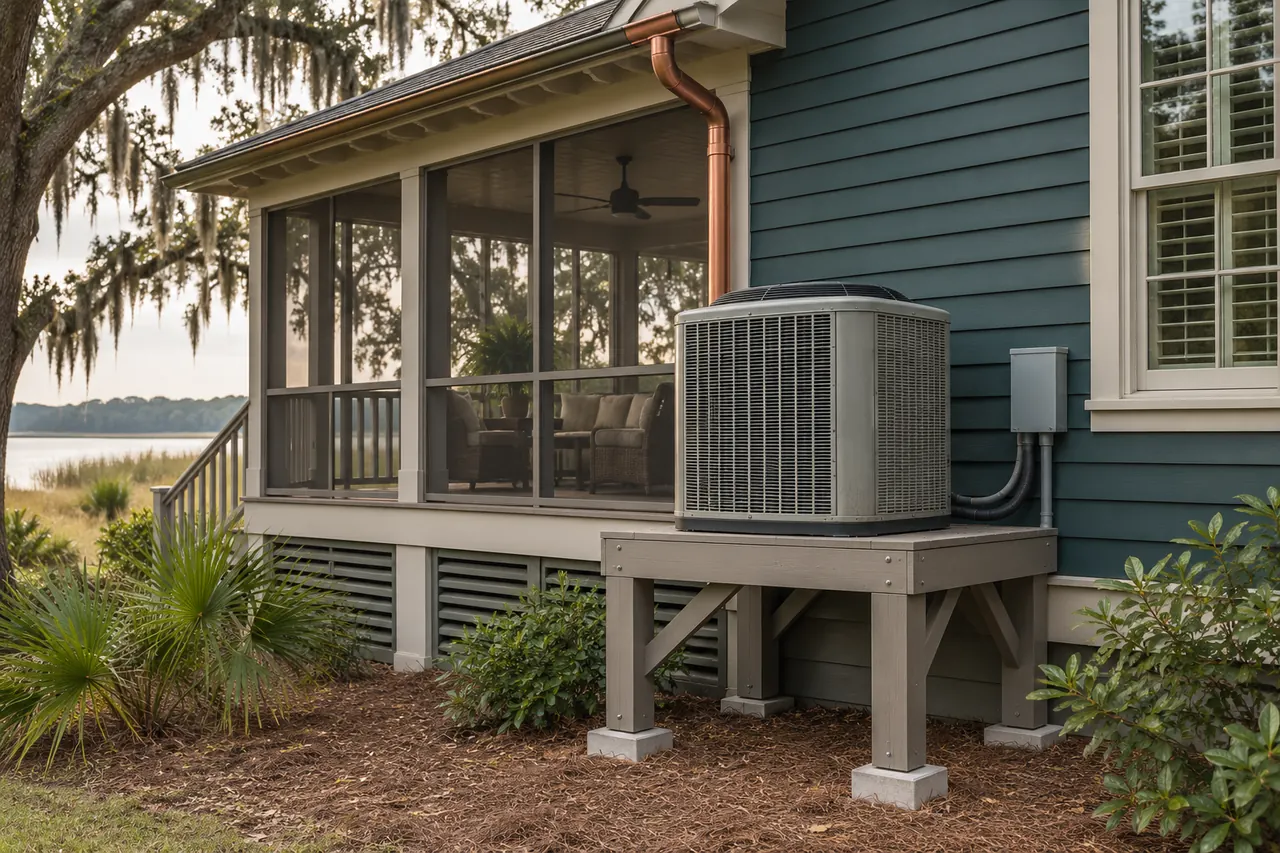
Walk one job from quotation through collection. Charleston identifies areas of special flood hazard and provides specific guidance for machinery and existing HVAC below design flood elevation. A street address and the proposed scope determine which questions reach the city’s permit desk. Use your notes to record the elevation information the estimator used, who checked site restrictions and what the permit approved. On an existing building, look at what happens when the customer changes the placement after installation begins. A standard replacement proposal can leave the shop absorbing new platform, ductwork or engineering expenses.
Suppose the job ledger calls a system complete because the crew commissioned it on Friday. The homeowner withholds the balance until the inspector accepts the installation, and the lead installer needs another morning plus a helper to correct the supports. An uncollected balance at closing carries a labor obligation that the accounts receivable aging omits. Ask the seller to split the exception into expected cash, remaining material, crew time and responsibility for arranging inspection. Have the parties decide who can direct the repair if the seller retains the receivable but the buyer employs the crew.
Illustrative composite — not a real client. A coastal seller lists $108,000 of final balances on twelve replacements. Eight cleared inspections account for $72,000. Four balances total $36,000 and require $7,200 of expected corrections and return visits. The second group could contribute $28,800 before collection costs if the customers ultimately pay in full. Suppose the seller keeps all twelve receivables. The parties can identify the four files, authorize reimbursement to the buyer for documented corrective work, and specify who pursues the balances. Putting the $108,000 in buyer working capital while allowing the seller to keep the checks would count it twice.
What do seasonality and technician availability look like at branch level?
A Greenville dispatch board and a coastal route can support different economics even in a single company. For your file, request completed visits by month, paid hours, overtime, weather-related reschedules and miles between stops. Test whether an unusually busy summer increased completed gross profit or simply filled the dispatch software with calls the shop could not service. Split urgent work from planned maintenance. On an island or peninsula, map the first and last appointments and the spare capacity available when a callback interrupts the day.
Talk to a lead installer and a dispatcher about the last time a technician resigned with short notice. Ask which calls could be reassigned, which equipment required specialist experience and which credentials were held by the departing person. Use a written recruiting quote, recent offers and actual wage increases to budget the next hire. Where the owner handles unusual humidity complaints or commercial refrigeration diagnostics, budget time for that work separately from managing the company. A single technician can fill both roles today while leaving two different coverage problems at closing.
There is publicly documented multi-market residential operator activity in the Upstate. Wrench Group lists Greenville among its operating markets. That evidence helps identify the type of established operator a seller might encounter. It gives no information about an offer for a particular contractor. A commercial refrigeration service buyer might instead focus on response guarantees, who can dispatch after hours and how many stores one supermarket operator controls. Tailor the diligence package to that work and preserve customer anonymity until specific disclosure is justified.
How should a buyer verify a rebate-backed order?
The South Carolina Energy Office described the state HEAR and HOMES programs as under development at the November 2026 review. Recheck directly when you bid a deal. The state discusses household eligibility, approved contractors and an energy assessment for its proposed whole-home pathway. An inquiry about a potential incentive is a lead. Move it into contracted backlog after the homeowner signs the actual scope, required program approvals exist, and the financing and installation conditions are documented.
- Read the electric bill for the installation address. Identify the electric utility and customer receiving service. A Dominion gas bill by itself leaves the electric service territory unresolved.
- For an existing Dominion Energy South Carolina equipment-replacement claim, check the program’s eligibility instructions, model and customer paperwork. Find the dated submission and the payee designated on it.
- Match approved dollars to cash receipts or an outstanding receivable. Ask the program administrator who may cure an incomplete claim after control changes and how long the parties have to respond.
- For jobs sold on a possible future state discount, ask the customer-facing team how it describes the obligation if incentives change. Preserve any signed price guarantee and budget the cost of honoring it.
What belongs in a South Carolina closing condition?
Make a short list of the facts that have to be true to serve Monday’s customers. Give the board the acquisition structure, operating name and personnel plan. Before you rely on it, confirm the residential bond, commercial classification and local permits that matter for the first week. Assign responsibility for open inspections, storm-related callbacks and claims awaiting a utility response. The party with authority to act should have access to the relevant record and a funded way to pay for the work.
For a seller, confirm that any continued qualifying or supervisory role carries actual duties, authority, pay and a defined exit. For a buyer, retain enough liquidity for the crew to finish a troublesome scope while a reimbursement is delayed. Use the qualifier handoff test to document coverage, the revenue mix calculator to isolate exposed lines of work, and the data room index to keep the evidence attached to the decision it supports.
At the final working-capital review, give your closing team an example remittance that covers several addresses in one payment. Identify the jobs the seller finished before you close, the buyer’s later work and any amount withheld for missing paperwork. Specify who opens the remittance advice, when the other party receives a copy and who owns each unpaid balance. Several contractors can use the same trade name over time, and a utility or property manager may send a combined payment to whichever bank account it already has on file. A worked allocation prevents an avoidable argument about money both parties expected to receive.
Where can you go next?
What else should you know?
Can a South Carolina buyer acquire the seller's mechanical license?
Identify the entity that holds the license and the primary qualifying party associated with each classification. Bring the intended ownership and personnel changes to the Contractor's Licensing Board before agreeing to a start date. The individual residential specialty license and its bond require a separate review.
When does a South Carolina residential HVAC contractor need a bond?
The Residential Builders Commission identifies a $10,000 surety bond for a residential HVAC specialty licensee when the cost of an undertaking for an individual property owner exceeds $5,000. Confirm how the bond is issued and whether any certificate of authorization affects the entity that will contract with customers.
Do replacement jobs inside Charleston need floodplain review?
Start with the street address. Charleston says work in its Special Flood Hazard Area requires permitting and publishes equipment elevation guidance for HVAC systems. Ask city staff how the rules apply to the proposed repair or replacement, and keep the approved drawings and final inspection with the job record.
Can projected South Carolina state rebates support my purchase price?
At the November 2026 review, the state described HEAR and HOMES as still under development. Verify current applications and eligibility before counting program work. Dominion Energy South Carolina has separate utility incentives. Test an actual customer bill, qualifying equipment and claim file before forecasting collections.
Which sources informed this page?
- Commercial licensure and qualifying party requirements · South Carolina Contractor's Licensing Board, November 21, 2026
- Bond requirements for residential specialty contractors · South Carolina Residential Builders Commission, November 21, 2026
- Building construction in flood zones · City of Charleston, November 21, 2026
- South Carolina home energy rebates and current availability · South Carolina Energy Office, November 21, 2026
- Residential equipment replacement rebates · Dominion Energy South Carolina, November 21, 2026
- Our operating markets · Wrench Group, November 21, 2026